You’ve likely heard stories of people losing their digital assets the moment they entered their gift card details into a website, haven’t you?
These stories usually begin with an irresistible offer to exchange balances at an unbeatable rate and end with the website vanishing entirely.
But did you know that some fingerprints reveal the falsity of these sites, no matter how precise they appear?
In this guide, we will learn how to spot fake websites claiming to exchange balances in a clear and simple way that protects you from falling into the trap of digital fraud.
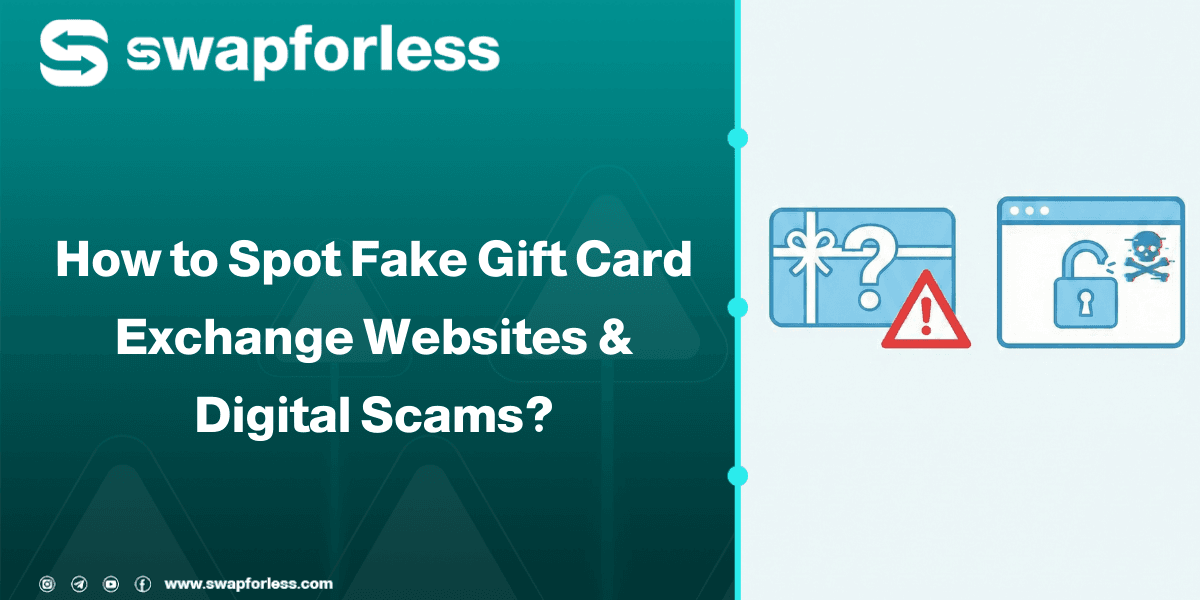
What is a Fake Website and How Does it Work?
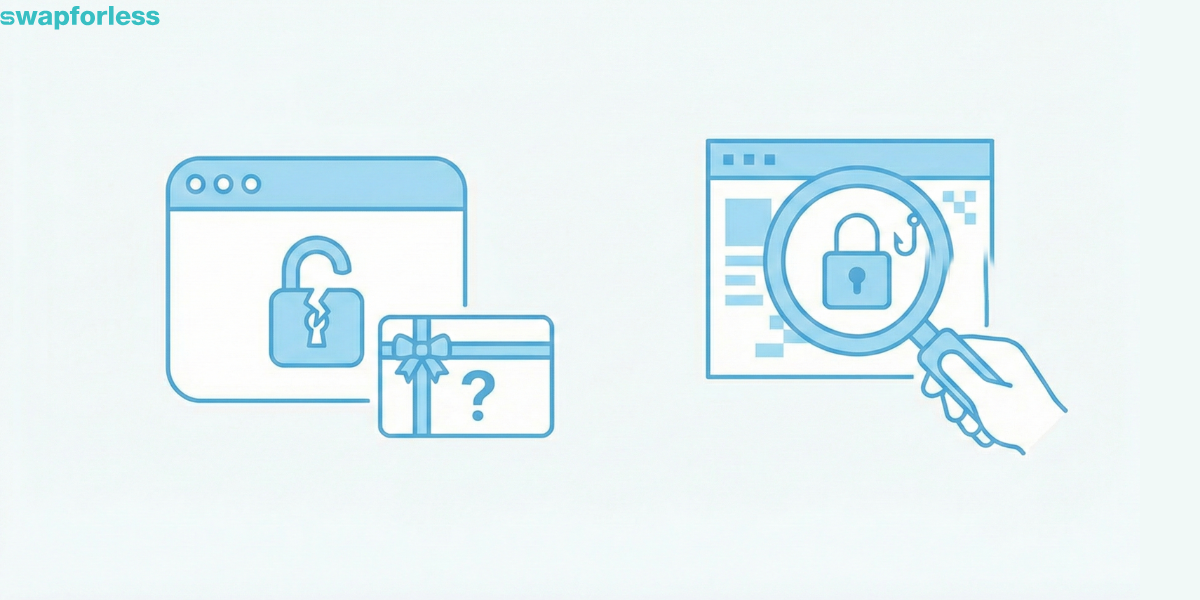
A fake website is a phishing platform designed to steal gift card codes and financial data through a counterfeit interface that mimics banks or exchange platforms. It is much like a “movie set.”
From the outside, it looks like a real building or a trusted bank, but as soon as you open the door and place your money inside, you discover there is nothing behind that wall.
The primary goal of these phishing sites is not to provide a balanced exchange service, but to steal your gift card code or your digital wallet credentials.
Once they get what they want, the site is either shut down or you are simply blocked.
What are the Signs that Reveal a Fake Balance Exchange Site?
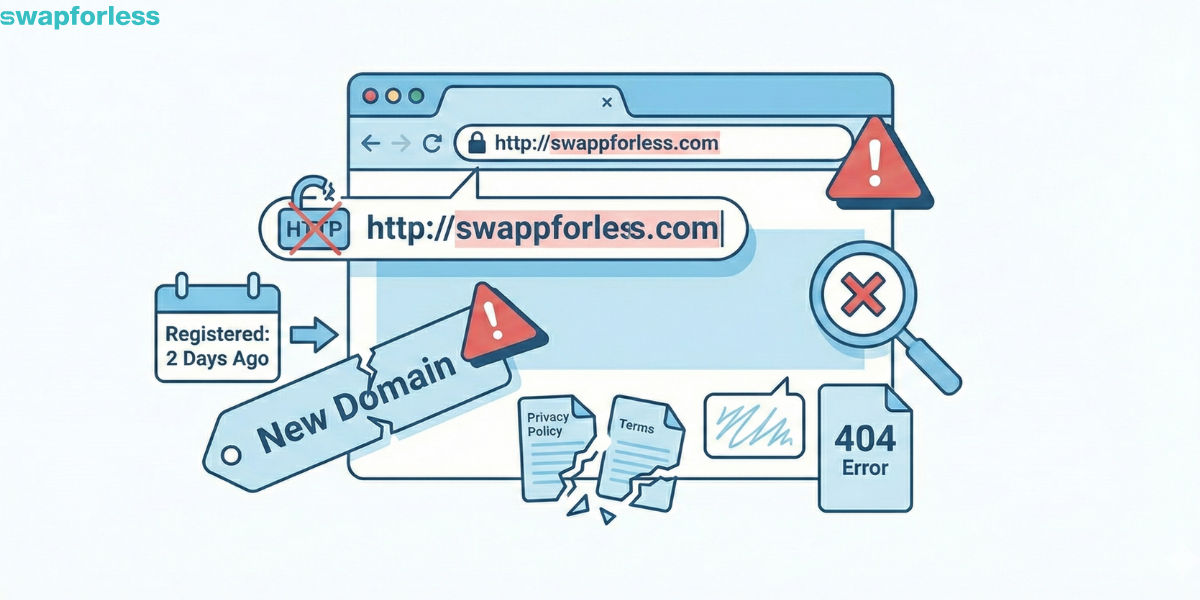
The signs that reveal a fake balance exchange site include misleading URLs, the absence of the HTTPS protocol, a recently registered domain, and a total lack of legal documentation. To distinguish a real site from a fake one, you must become an observer looking for specific components:
- The Website Link (URL): Scammers often use names very similar to well-known sites, changing just one letter (e.g., Swappforless instead of Swapforless). Always double-check the spelling.
- Security Protocol (HTTPS): A trusted site must start with HTTPS, not HTTP. The “S” stands for secure, meaning the data between you and the site is encrypted. However, be cautious; some scammers now use basic security certificates, so this is a necessary condition but not sufficient on its own.
- Domain Age: Fake websites have a short lifespan. You can use simple online tools to see when a site was created; if it is only days or weeks old yet claims to be the “world’s largest platform,” that is a major red flag.
- Absence of Legal Data: Official platforms provide detailed and clear links to their Privacy Policy and Terms of Use. Fake sites often have broken links or random, copied text.
How Does the Exchange Trap Work in Practice?
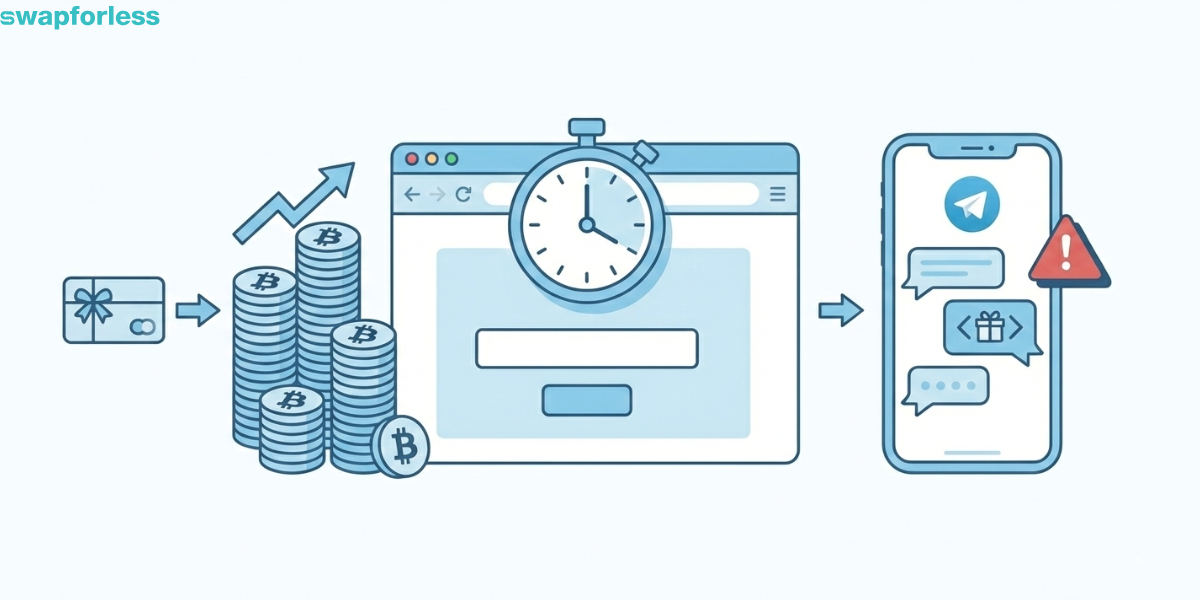
Now that we know the signs, let’s look at how a fake site lures you in:
- The “Too Good to Be True” Offer: It starts with an advertisement for a USDT exchange rate against Amazon or Razer Gold cards that is significantly higher than the global market price. Remember: no one sells money at a loss.
- Urgency and Pressure: You might see a countdown timer or messages telling you the “offer will expire shortly.” The goal is to push you into a quick decision without verifying the site.
- Lack of Official Payment Gateways: Fake sites ask you to enter the code directly into a simple box without any verification system or integration with recognized payment providers.
- Personal Communication: The site often directs you to a “middleman” on Telegram to complete the process manually, exposing you to the risks of trading cards in Telegram groups.
How to Protect Yourself and Verify Platform Credibility
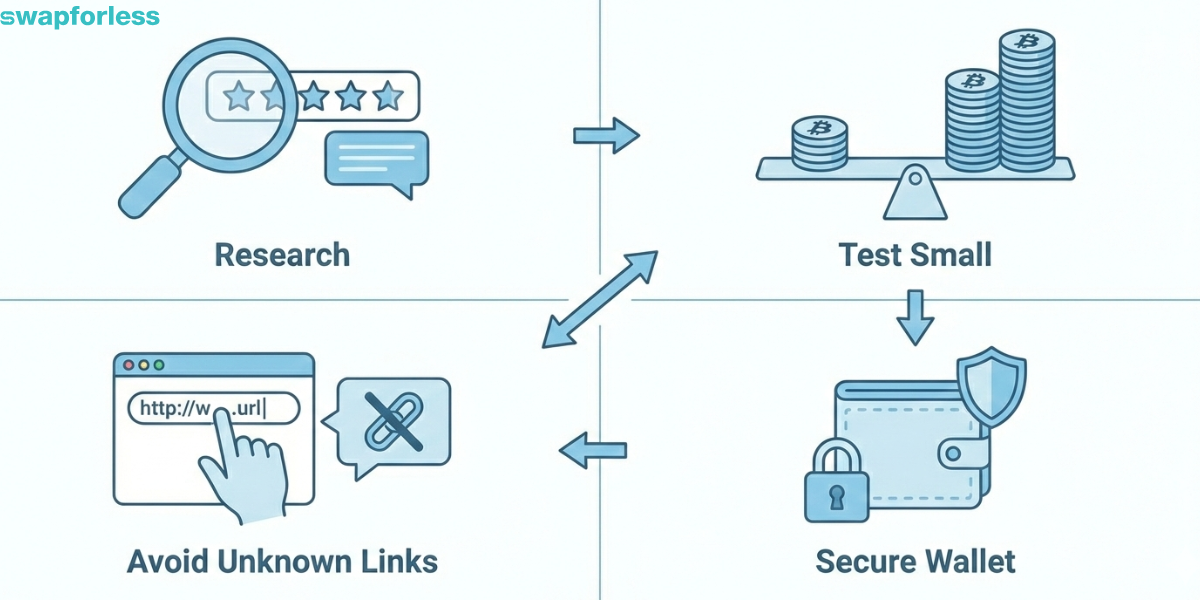
To stay safe, do not rely on how “pretty” a website looks. Instead, follow these rules:
- Research the Reputation: Search for the platform’s name on independent review sites or ask in trusted gaming communities. A real platform like Swapforless has a history of transactions and a clear track record.
- Test with Small Amounts: If you are using a platform for the first time, do not liquidate large balances immediately. Test with a very small amount to check response speed and credibility.
- Avoid Unknown Links: Do not enter exchange sites via links sent to you in private messages or random emails. Always type the address into your browser yourself.
- Secure Your Wallet: Even when dealing with websites, ensure you learn how to protect your digital wallet from theft to ensure no party can access your primary savings.
Are All Sites that Charge a Commission Bad?
Quite the opposite; one of the benefits of official platforms is that they charge a commission to ensure cybersecurity and provide technical support.
A site claiming to offer services for “free” or “without commission” is usually planning to steal the entire value of the balance. Investing in security by paying a small commission is always the smarter decision.
Conclusion
Scammers bet on your desire for speed or easy profit, but your awareness of how to spot fake websites is the shield that protects you.
Always start with “healthy skepticism,” rely on platforms that offer full transparency in their dealings, and place the security of your assets above any momentary temptation.
Remember that the Swapforless platform provides you with a secure environment that protects you from these mazes, ensuring your rights are delivered to you without risk.